
What Do Christian Missionaries Do

Where Are Christian Missionaries Needed Most, and How Do They Make a Difference?

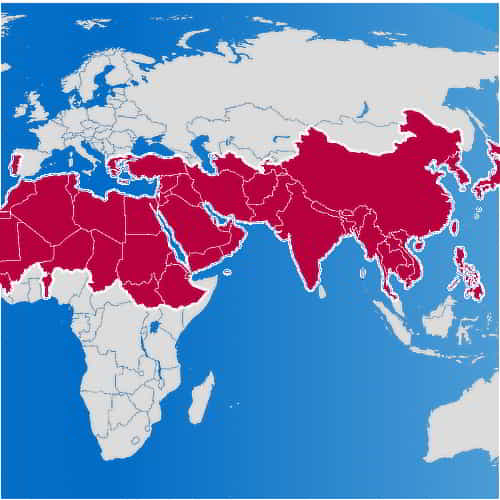
In answering the question, “Where are Christian missionaries needed most, and how do they make a difference?” GFA World recognizes the critical importance of the 10/40 Window. The 10/40 Window, as defined by Advancing Native Missions, includes North Africa, the Middle East, and parts of Asia, from 10 to 40 degrees north.

Here, we find most of the world’s unreached people groups, isolated from the hope that comes with the message of Christ. According to the Joshua Project, over 3 billion people within this window have not heard the Good News.[1]

The scope of this need becomes clearer when considering global missionary deployment. Approximately 430,000 missionaries currently serve full time on mission fields worldwide. This represents a sharp decline from over 1.1 million people who served in 2001, according to research tracking self-described Christian missionaries serving two or more years.[8]
For families and communities within these regions, this represents both tremendous progress and remaining need. The dedication of those who answer this calling demonstrates the enduring power of faith lived in action.

Understanding the 10/40 Window and Global Mission Demographics

The 10/40 Window is characterized by significant challenges, including poverty, limited access to education and inadequate healthcare. These physical hardships are compounded by spiritual needs as most in this region live without the hope and transformation that comes from knowing Christ.[2]

GFA World missionaries, many of whom are native to these regions, are uniquely equipped to address these challenges. Their understanding of local languages and cultures allows them to build trust and share God’s love in meaningful, culturally sensitive ways.[3]

While the United States remains the largest missionary-sending nation with approximately 135,000 missionaries serving abroad, North America has experienced notable shifts in its missionary engagement. Sixty percent of unreached groups now reside in countries closed to missionaries from this region, according to data from missions research organizations.[9]
Cultural and linguistic barriers often make access difficult. Yet these obstacles have not diminished the calling. God continues to open unexpected doors.

Remarkably, Latin America has emerged as a significant missionary-sending force in recent decades. Brazil now deploys the second-highest number of missionaries globally at approximately 40,000, demonstrating the geographic diversification of modern missionary work and the maturation of churches once considered mission fields themselves.

This shift reflects how the center of Christianity has moved southward over the past century. Communities once receiving missionaries now send them in remarkable numbers.

How Missionaries Address Critical Needs

GFA World missionaries focus on an all-encompassing ministry, addressing both spiritual and physical needs. For example, GFA teams often conduct medical camps in rural communities where healthcare is scarce.

These initiatives provide free medical checkups, medicines and hygiene education to families who could not otherwise access such care. By meeting these immediate needs, the missionaries reflect the compassion of Christ and open doors for spiritual conversations.[4]
Among these dedicated workers, the challenges of long-term service remain significant. Nearly half of all missionaries serve five years or less on the field due to challenges including culture shock, language barriers, and isolation, underscoring why full time commitment to missionary work requires sustained prayer and practical support from sending communities.

The decision to serve long-term carries weight. For many, it means leaving behind familiar comforts to embrace an uncertain path filled with both hardship and profound joy.

Bringing Scripture to Every Language

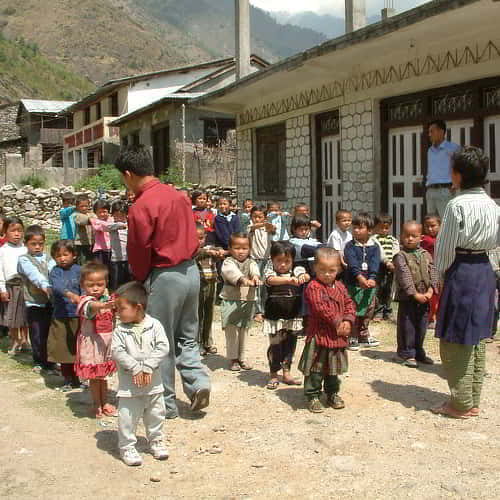
Education is another critical area of focus. Given the widespread poverty in the 10/40 Window, many children likely have little to no access to quality education, leaving them trapped in cycles of poverty.[5]

GFA World missionaries establish schools and provide vocational training, equipping individuals with skills to build better futures. These efforts demonstrate God’s care and love, providing both practical support and spiritual encouragement.[6]
Closely linked to education is Bible translation, where recent progress has been remarkable. The number of languages still waiting for translation work to begin dropped from 985 in 2024 to approximately 550 by early 2025, with translation now underway in more than 4,400 languages, representing historic acceleration toward Scripture access for all peoples.

This progress opens doors that were previously closed. When people encounter God’s Word in their heart language, transformation becomes possible in ways that external translations cannot achieve. The message goes straight to the heart.

Church Planting and the Great Commission

As missionaries fulfill the Great Commission through church planting, they recognize that establishing self-sustaining local congregations remains essential to long-term spiritual transformation. This calling extends beyond simply gathering believers — it involves raising up local leadership, fostering discipleship, and creating communities of faith that can continue growing independently.

New congregations become beacons in their communities. They provide not just weekly gathering places, but centers of hope, discipleship, and practical service that endure long after founding missionaries transition their roles.

Global Christian populations are shifting dramatically across continents. While 80 percent of Christians lived in Europe or North America in 1900, today only 25 percent reside in these regions, with the remainder now concentrated in Africa and Asia, according to World Christian Database figures reflecting Christianity’s southward movement over the past 125 years.

This demographic shift carries profound implications for how the global church understands and engages in mission. The face of global Christianity has changed fundamentally, and with it, the patterns of who sends and who receives missionaries have been transformed.

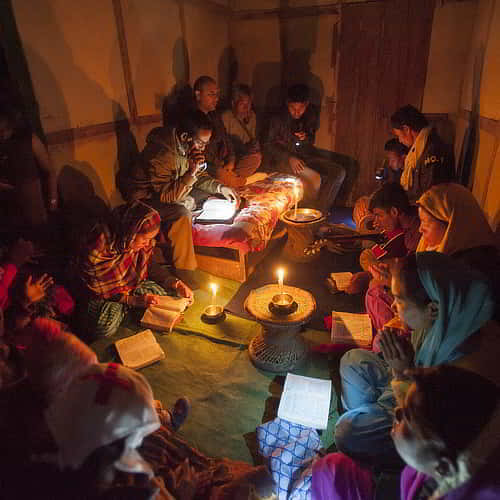
The impact of GFA World missionaries is perhaps best illustrated by personal stories. One father, initially resistant to the Good News, was deeply moved by his son’s dedication as a missionary.

Through this young man’s persistent kindness and prayer, the family came to embrace the love of Christ, experiencing peace and joy that transformed their lives. Stories like this illustrate the ripple effect of one life committed to sharing God’s love, which can lead to the transformation of entire families and communities.[7]
These transformations do not happen through programs alone. They emerge from relationships built over years of faithful presence and patient love.

The greatest need for Christian missionaries remains in regions like the 10/40 Window where billions are waiting to hear the message of hope. GFA World missionaries are making a difference, not by imposing solutions but by living among the people, sharing their burdens and embodying Christ’s love.

Their work transforms lives both spiritually and physically, bringing hope to the most neglected and underserved parts of the world.

Despite remarkable progress in missionary mobilization over the past two centuries, the task remains immense. Approximately 40 percent of the world’s population remains unevangelized, with over 3 billion people in the 10/40 Window still lacking access to the Good News, according to recent mission research compiled from global Christian databases.
The need remains immense. Yet every missionary sent, every church planted, every Scripture translated represents progress toward the day when all peoples will have heard.

What do Christian missionaries do? Learn more at GFA World

[1] “What Is the 10/40 Window and Why Is It Important?” Advancing Native Missions. September 29, 2023. https://advancingnativemissions.com/what-is-the-10-40-window-and-why-is-it-important/. Accessed March 22, 2026.
[2] “What is the 10/40 Window and how can we reach it?” Crossworld. Accessed March 27, 2026. https://crossworld.org/blog/details/what-is-the-10-40-window-and-how-can-we-reach-it.
[3] GFA World. “Sponsor a Missionary.” Accessed January 25, 2025. https://www.gfa.org/sponsor/.
[4] “Administering Mercy, Prescribing Love.” GFA World. October 2024. https://www.gfa.org/news/articles/administering-mercy-prescribing-love-wfr24-09/.
[5] “What is the 10/40 Window and how can we reach it?” Crossworld. Accessed March 27, 2026. https://crossworld.org/blog/details/what-is-the-10-40-window-and-how-can-we-reach-it.
[6] GFA World. “Pray for Vocational Training.” Accessed January 25, 2025. https://www.gfa.org/pray/vocational-training/.
[7] “A Father’s Faith Leads Family to God.” GFA World. July 2023. https://www.gfa.org/news/articles/a-fathers-faith-leads-family-to-god-wfr-23-07b/.
[8] “2026 Christian Missionary Statistics.” Nations Outreach. April 12, 2025. https://nationsoutreach.org/blog/christian-missionary-statistics/. Accessed March 22, 2026.
[9] “Missions Statistics.” The Traveling Team. 2024. https://www.thetravelingteam.org/stats. Accessed March 22, 2026.