
Christian Missionaries

How Do Christian Missionary Stories Reflect the Work of GFA World?

Christian missionary stories have always showcased God’s love and provision.[1] This echoes the heart of GFA World’s mission: to demonstrate God’s love through practical service and spiritual transformation. These stories illustrate how our missionaries faithfully serve communities by meeting urgent needs, like the need for clean water, while sharing the hope of Jesus Christ. Through projects like Jesus Wells, we are able to bring life-changing solutions to people who desperately need them.

Field accounts carry more than information. They show hope reaching families through wells, prayers, reconciled neighbors, and restored lives. Often, missionaries are sharing the Gospel through patient words. Visible care makes the message harder to forget when urgent needs have first been met.

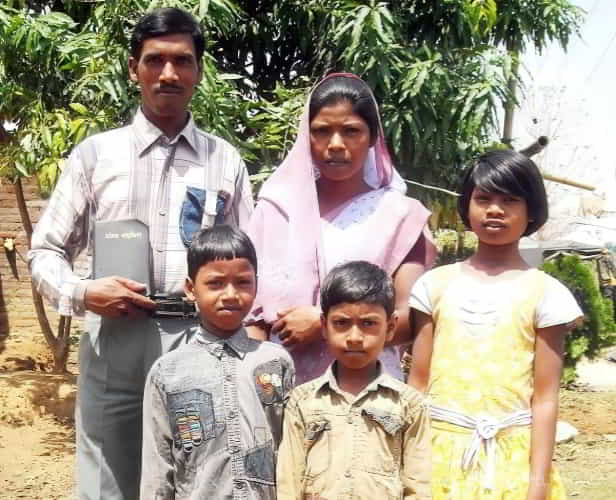
One such story is how God used GFA missionary Pastor Salm to reach Balab and his family with hope. Balab, his wife and their five children suffered greatly because of a lack of clean water. In his village, Christians were forbidden to use the community water source, already polluted and unsafe.[2] Faced with illness and rejection, Balab’s family endured malaria, typhoid and deep discouragement.

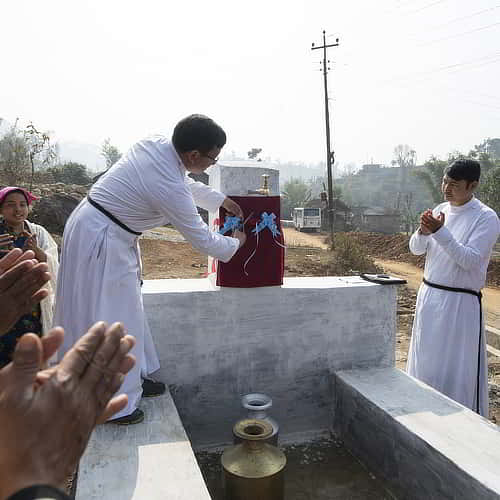
Pastor Salm prayed for them and shared God’s Word, encouraging them in their struggles. When Pastor Salm saw the hardship, he facilitated the ministry’s installation of a Jesus Well for their village. Soon, clean, safe water was freely available—not just for Balab’s family, but for the entire community.

The rejection cut deeper than physical hardship because it told Balab’s family their faith made them unwelcome. For a father watching children fall ill, isolation was as heavy as sickness. Pastor Salm’s patient return reflected genuine missionary service. Trust came through repeated kindness before any visible result appeared.

Over time, attitudes in the village changed. What began as suspicion softened into openness as week after week the villagers watched the well serve their children without distinction. The change was gradual, not dramatic — the kind that happens when consistent kindness eventually outlasts old assumptions. Witnessing the love and care shown by Christians, the villagers grew more accepting of Balab’s faith. The Jesus Well became a source of health for all and a powerful reminder of the Living Water Jesus offers.

How Do Jesus Wells Build Trust in Communities?

This pattern repeats across the regions where GFA World serves. Clean water reshapes the social landscape, reducing daily friction and creating space for strained relationships to heal. From initial rejection to welcome, the arc shows what full time presence can accomplish over months of consistent care. The same well serves everyone, regardless of belief — a reminder that mission work begins with meeting the need in front of you.

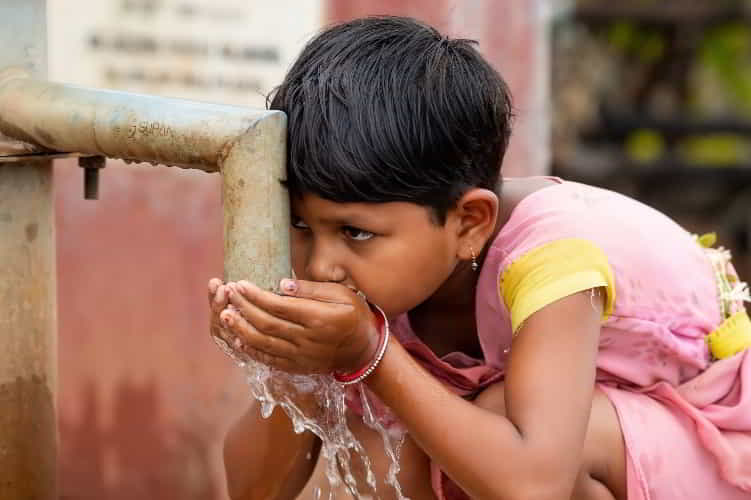
Stories like Balab’s reflect the heart of GFA World’s Jesus Wells project.[3] For 25 years, these wells have transformed communities by providing reliable access to clean water. So far, our clean water projects have benefited more than 39 million people.[4] Dug up to 600 feet deep, Jesus Wells ensure a steady supply of clean water, even in the driest seasons. Each well is built using local labor and materials, keeping costs low while helping boost the local economy.

That number represents individual families. Daily life changed when they no longer walked miles for unsafe water. Local labor built ownership. The wellhead became a place where neighbors met, children played, and conversations began.

In one remote village, GFA workers built a two-mile-long water pipeline through a rainforest to provide clean water to households suffering from contaminated sources. This project dramatically improved the community’s health, softening hearts toward Christians as they witnessed the love of Christ in action.

The pipeline carried more than water; it carried a visible demonstration of love the villagers had not expected. What began as infrastructure became a bridge of relationship. Workers shared meals, answered questions about faith, and showed through daily labor what service without condition looks like.

What Can We Learn from Pioneer Missionaries of the Past?

Missionary service has a long memory. Earlier heroes of the faith left patterns of courage that still inform the work today. Their lives show how deep trust can sustain a calling through pressure, obscurity, and years of difficulty.

Hudson Taylor embodied this trust. Christianity Today records that Taylor founded the China Inland Mission in 1865 with a radical conviction. Its workers carried no guaranteed salary. They chose to trust God for every need, and Taylor later credited the mission’s growth to prayer.

Taylor adopted Chinese dress, studied local dialects until he could preach fluently, and insisted his missionaries live among the people rather than in segregated compounds. That commitment to incarnational presence closed the social distance that kept many missionaries from genuine connection. It became a hallmark of the mission and shaped how succeeding generations approached cross-cultural service.

David Livingston demonstrated a different kind of pioneering courage across Africa. Christianity Today notes that Livingstone spent decades crossing and remapping central and southern Africa, convinced that the message of Christ and the exposure of injustice belonged together. He died in 1873 at his bedside in prayer, far from home — yet the vision of what a pioneer missionary is called to risk outlasted him by more than a century.

Livingstone died with much of his work unfinished, kneeling beside his cot in a remote village. His routes still mattered. By exposing the slave trade, he gave later workers a clearer moral burden. That refusal to abandon the people he served still challenges the mission field today.

Brother Andrew brought the same resolve into the twentieth century. Wikipedia records that the Dutch missionary founded Open Doors in 1955 and carried Bibles across the Iron Curtain. He placed Scriptures openly at police checkpoints as a visible declaration of confidence in God’s protection. By the time of his death in 2022, one young man’s burden for the global church had become a ministry serving persecuted Christians in many countries.

How Have Women Missionaries Shaped the History of Faith?

Women have shaped mission history in ways male workers often could not. In parts of Africa and Asia, cultural boundaries may limit close ministry with women, while female missionaries can enter homes and build trust. Through that access, they offer spiritual guidance to women facing grief, danger, poverty or isolation.

Mary Slessor brought this same tenacity to West Africa. Her biography records that Slessor arrived in what is now Nigeria in 1876 and spent nearly four decades among the Efik and Okoyong peoples, learning their language, saving abandoned twin infants, settling disputes between villages, and building deep relationships through patient daily presence. The Efik people honored her with the title Queen of Okoyong — an acknowledgment of trust earned through decades of service without interruption.

From the villages of West Africa to the communities of South Asia, the same pattern emerges. Women stayed long enough for suspicion to weaken. Their consistent care, offered without condition, opened doors that would have stayed closed to anyone else.

Amy Carmichael is among the most influential women in mission history. The Dohnavur Fellowship records that Carmichael served in South Asia for 56 years without one return visit home. She adopted local dress and customs, learned the language thoroughly, and dedicated herself to rescuing vulnerable children. Her life demonstrates what full time commitment looks like when a calling consumes a whole person for half a century without interruption.

What these women shared was not an unusual capacity for sacrifice. It was an unusual willingness to remain. Climate, language, and isolation would have driven many people home within the first year. Their patient presence runs through every era of missionary work, showing how steady faithfulness can outlast visible results.

Why Do Missionary Stories Point to Lasting Transformation?

At GFA World, missionary stories reflect the call to serve ‘the least of these’ (Matthew 25:40). Providing clean water through Jesus Wells meets a critical need while pointing people to Jesus, the true Living Water. Every life transformed through projects like Jesus Wells is a reflection of God’s love and care.[5]

This is the pattern that defines how the work proceeds. A pressing physical need is met without losing sight of the spiritual hunger beneath the surface. What makes these stories memorable is not the size of the project but the simplicity of the act — one well, one family, one village at a time.

The work of bringing clean water does not end with the drilling of a well — it continues in relationships formed during its construction, questions asked over shared meals, and trust built through visible commitment to a community’s health. When a family that once opposed the presence of a missionary work effort begins to read aloud from the Scriptures in their own home, the transformation has reached deeper than water can carry. That deeper change is what the stories preserve.

The transformations flowing from mission work are measured in reconciled families and communities where suspicion has given way to trust. No single project can ever guarantee that kind of outcome. Patient presence makes such change possible over time. Repeated love gives trust enough room to grow in ordinary life.

Clean water changes ordinary days. Mothers spend fewer hours searching for a source that will not sicken their children. Children return with strength for school. In that steadier rhythm, trust has room to grow slowly.

Through the work of GFA missionaries, entire communities are empowered, hearts are changed and God’s love shines brightly. Each Jesus Well is more than clean water—it is a testimony to the Good News, flowing freely for all.[6] Sponsor a missionary to become a part of this historic mission.

Each well becomes a place where the Good News is lived out before it is spoken aloud. That visible love stirs questions in families who once kept their distance. Faith takes root slowly. The stories are about restoration — families reunited, children healthy, neighbors reconciled.

Learn more about the faithful Christian missionaries who serve at GFA World

[1] “Jesus Wells’ Project Aims to Reach 40 Millionth Person with Safe Drinking Water.” GFA World Digital. March 26, 2024. GFA press release.
[2] “Jesus Well Provides Safe Drinking Water and Changed Attitudes.” Patheos. April 6, 2018. Patheos article.
[3] “Jesus Wells’ Project Aims to Reach 40 Millionth Person with Safe Drinking Water.” GFA World Digital. March 26, 2024. GFA press release.
[4] “Jesus Wells: A Clean Water Project.” GFA World. Accessed December 17, 2024. GFA water project.
[5] “Jesus Wells’ Project Aims to Reach 40 Millionth Person with Safe Drinking Water.” GFA World Digital. March 26, 2024. GFA press release.
[6] Ibid. GFA press release.