
Ambassador for Christ

What Does Being an Ambassador for Christ Look Like Today?

Paul wrote to the Corinthians about being an ambassador for Christ around 2,000 years ago, so it may seem like his words do not or cannot apply to modern believers. However, the ministry of reconciliation, which Paul says is the ambassador’s task (2 Corinthians 5:18), is just as important now as it was then.[1]

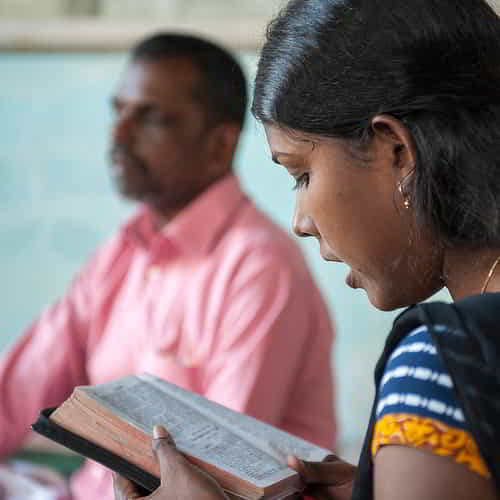
The Apostle Paul dedicated much of his life to establishing local churches across the Roman world, equipping believers for this sacred calling through his letters and personal ministry. His writings reveal a consistent pattern: those who are reconciled to God then become agents of reconciliation to others, carrying forward the message of hope.

Paul’s Vision for Ambassadors

As the early church spread, Paul emphasized that believers must represent Christ in both word and action. This calling flowed naturally from understanding Jesus Christ as the ultimate reconciler between humanity and the Father.[6]

The kingdom of God advances not through force or manipulation, but through humble servants who demonstrate divine love in practical ways. Paul understood that when communities witness compassion paired with truth, hearts open to receive the Good News.

This understanding shaped how Paul trained leaders, emphasizing both doctrinal clarity and practical service.[9] Ambassadors carry more than a message; they embody a way of life that reflects Christ’s character in every interaction.

The Early Church’s Example

The early church served as Christ’s ambassadors by enduring tribulation and persecution, being unified in the body, walking in obedience to God, growing in the grace and knowledge of Christ through the Word, corporate prayer and living in peace with each other.

They didn’t always accomplish these things perfectly, as many of Paul’s letters reveal, but as they lived out these commands, they showed God’s love to the rest of the world. These believers transformed their societies by caring for widows, feeding the hungry, and welcoming the outcast—actions that distinguished them from surrounding cultures.

Their witness proved particularly powerful because it addressed both spiritual longings and tangible needs, a pattern that remains central to effective Christian witness today. Modern believers continue this legacy by combining proclamation with demonstration, showing that faith produces real, observable fruit in human lives.

Today, the church has the same calling. Times have changed, but God’s will for His people—to share His love—has not.

How do believers embody this calling in practical terms? Believers are to “model Christ-like behavior as we go out into the world. We are to: Love God first and love our neighbors as ourselves. Be devoted to … the Scriptures. Be mission-minded and share the good news. Obey God rather than men. Be thankful … and be at peace with everyone.”[2]

Historical evidence shows that early Christians’ commitment to these principles sparked remarkable growth, with the faith expanding from a small movement to millions of adherents by the fourth century despite facing intense opposition.

A Global Need for Ambassadors

About 42% of the world’s population waits to hear about a God who loves them, but only 3% of the world’s missionaries are working in those areas.[3] This stark disparity underscores an urgent missional imperative that requires immediate, sustained response from God’s people everywhere.

When we preach the gospel alongside tangible demonstrations of care, we follow the pattern Jesus established during His earthly ministry. So GFA World seeks to be effective ambassadors by answering the call for reconciliation and directing our prayers, work and finances into those places.

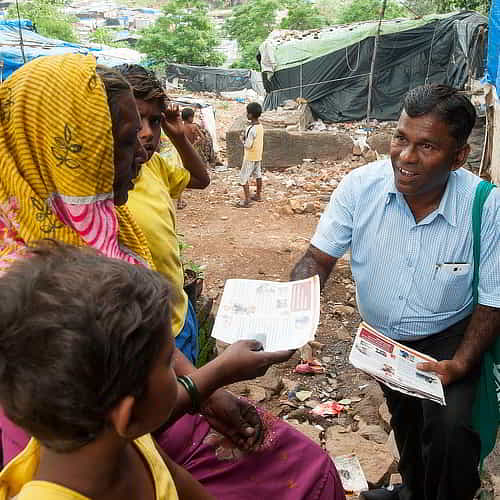
The love of Christ compels us to serve the most vulnerable, recognizing that practical compassion opens doors for spiritual transformation. Our national missionaries are the hands and feet of Christ, helping meet physical needs, like providing clean water, providing income generating animals, offering medical care, uplifting marginalized women and helping at-risk children.

Research consistently demonstrates that holistic ministry—addressing both physical and spiritual needs—creates lasting transformation in individuals and entire communities.[7] As our missionaries share Christ’s love through their words and these deeds, God transforms lives and communities.[4]

Living as Ambassadors Daily

Not everyone is a missionary, but that does not mean each believer is not also called to be Christ’s ambassador. The call to represent Jesus extends to every follower of Christ, whether serving across continents or simply across the street in your own neighborhood.

Scripture reveals that Lord Jesus instructed His disciples to begin their witness in Jerusalem, then Judea and Samaria, and ultimately to the ends of the earth. People all over the world need to know about God’s love, even in your own community.

This geographic pattern teaches an important principle: authentic ambassadorship starts where you are. You, too, can share Christ through word and deed and watch as He changes lives and communities.

In this shared mission, dear friends in the faith encourage one another, pray together, and hold each other accountable to living out Christ’s call faithfully. Christian community strengthens individual witness, providing support and accountability that sustains believers through challenges and celebrates victories together.

Ambassadorship manifests in countless forms: speaking words of hope to someone facing despair, demonstrating integrity in business dealings, showing patience with difficult colleagues, or extending hospitality to newcomers. Each action, when motivated by Christ’s love and done in His name, becomes a witness that points others toward the Savior.

Addressing physical needs, praying and sharing the Good News is important everywhere, not just in poverty-stricken areas. Whether in affluent suburbs or struggling urban centers, people hunger for authentic relationships and genuine hope that only Christ provides.

Partnering in Global Ministry

GFA works in over 18 countries across Asia and more recently in Africa, and we cannot do it alone. Effective advancement of God’s purposes requires believers from diverse backgrounds partnering together, each contributing unique gifts and resources.

National missionaries possess distinct advantages in reaching their own people, including linguistic fluency, cultural understanding, and community trust that foreign workers often cannot achieve. Supporting these indigenous leaders multiplies ministry effectiveness while honoring the principle that God’s work thrives when local believers take ownership of reaching their neighbors.[10]

The ministry operates through indigenous leaders and established fellowships who understand cultural contexts deeply, enabling them to communicate Christ’s love in culturally appropriate, deeply meaningful ways.[8]

Another great way to be an ambassador for Christ is to partner with us. Consider sponsoring a national missionary, who can reach people with God’s love in remote regions closed off to outsiders.

Or consider sponsoring a child and helping provide them with a brighter future.[5] Sharing God’s love in practical ways like these can make a whole world of difference.

Learn more about GFA’s ambassadors for Christ!

[1] “What Does 2 Corinthians 5:20 Mean?” Bible Ref. Accessed October 15, 2024. https://www.bibleref.com/2-Corinthians/5/2-Corinthians-5-20.html.
[2] Baker, Lisa Loraine. “What does it look like to be an ambassador for Christ?” Bible Study Tools. November 21, 2024. https://www.biblestudytools.com/bible-study/topical-studies/what-does-it-looks-like-to-be-an-ambassador-for-christ.html.
[3] Project, Joshua. “Global Dashboard.” Joshua Project. Accessed January 7, 2025. https://joshuaproject.net/people_groups/statistics.
[4] “In Light of Eternity: GFA World 2024 Special Report.” GFA World. Accessed October 15, 2024. https://www.gfa.org/special-report/2024/.
[5] “About Us.” GFA World. Accessed October 15, 2024. https://www.gfa.org/about/.
[6] 2 Corinthians 5:18-20 (NKJV).
[7] “Holistic Mission.” Lausanne Movement. Accessed March 11, 2026. https://lausanne.org/content/statement/holistic-mission.
[8] “The Role of Indigenous Leadership in Global Mission.” Evangelical Missions Quarterly. Accessed March 11, 2026. https://missionexus.org/the-role-of-indigenous-leadership-in-global-mission/.
[9] 1 Timothy 4:12-16 (NKJV).
[10] “Missions Trends: The Rise of the Indigenous Missionary.” Christianity Today. Accessed March 11, 2026. https://www.christianitytoday.com/ct/2020/may-web-only/missions-trends-indigenous-missionary-movement.html.