
How to be an Ambassador for Christ
The term “ambassador for Christ” comes from Paul’s second letter to the Corinthians where he wrote, “Now then, we are ambassadors for Christ, as though God were pleading through us: we implore you on Christ’s behalf, be reconciled to God” (2 Corinthians 5:20).
This passage positions believers as representing the kingdom of heaven while living in the world. The role carries profound weight—ambassadors serve as the visible expression of Christ’s presence in communities that may never encounter Him otherwise.
What Is an Ambassador for Christ?
So, what is an ambassador for Christ? An ambassador is generally defined as a governmental official who represents their home country in a foreign land or a person who speaks for or advertises a specific organization, group or brand.[1] Thus, when Paul says a believer is an ambassador for Christ, he means that a Christian represents and speaks for Christ.
In Second Corinthians, Paul describes this responsibility as both the ministry of reconciliation and the message of reconciliation. These twin concepts clarify that ambassadors carry God’s appeal to a world estranged from Him.[2]
John 15:19 says that those who follow Christ “do not belong to the world,” so by living in the world and sharing the love of Christ, it is like they are representatives in a foreign land.
The early church modeled this ambassadorship through endurance, unity, obedience, and devotion to Scripture. Though imperfect—as Paul’s letters reveal—they demonstrated God’s love to a watching world by loving neighbors, being mission-minded, and obeying God rather than cultural pressures.
The Biblical Foundation of Ambassadorship
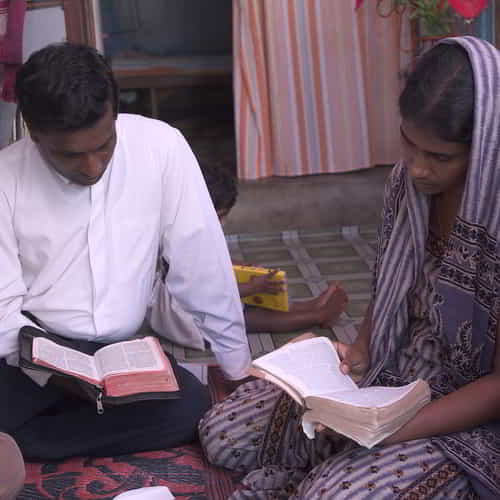
Conceptually, that all makes sense, but practically, what does it mean to be an ambassador for Christ? Representing Christ can take on many forms, from sharing the Good News of God’s incredible love, to offering earnest prayers, to showing God’s compassion by meeting physical needs.
When Paul wrote to the Corinthians, he used the Greek word presbeuo, which carries diplomatic weight—it described official envoys called to be an ambassador with full authority to speak for the sending government. This wasn’t casual representation; it was a sacred trust requiring both faithfulness to the message and sensitivity to the audience.
The phrase “as though God were making his appeal through us” underscores the mediating role—ambassadors don’t invent their message but faithfully transmit God’s reconciliation offer.[3]
GFA World: Serving as Ambassadors
GFA World is an organization working as ambassadors, and we are passionate representatives of Jesus to the world.
GFA was founded in 1979, and since then, we have been committed to serving the “least of these” in over 18 countries across Asia and now in Africa as well. We often serve in places where no one else is serving, so the people experience the love of God for the first time.
This reaches populations among the estimated 42% of the world that has yet to hear about Christ, even though only 3% of global missionaries serve in these least-reached areas.
GFA’s service comes in many ways. We train and send out national missionaries―humble servants who minister to the physical and spiritual needs of those in their community.
National missionaries prove especially effective because they already know the culture and language, move freely in restricted regions, and carry deep passion to reach their own people with God’s love. Their insider status opens doors that remain closed to outsiders.[4]
We also have a Child Sponsorship Program that supports more than thousands of children and their families, offering these precious children hope and a brighter future by providing key assistance that will help enable them to be successful in education.
For many families, this support breaks cycles of poverty that have persisted across generations. By addressing needs like nutrition, healthcare, and school supplies, the program creates pathways to stability previously out of reach.
GFA also works with community leaders in developing communities by helping provide basic necessities, like clean water, and by opening doors to break the cycle of poverty by gifting income-producing items like farm animals, sewing machines and vocational training. Along with all of that, GFA participates in disaster relief for victims of floods and earthquakes, and our Compassion Services team ministers to those who are rejected by many societies: widows and leprosy patients.[5]
The Heart of Ambassadorship: Meeting Physical and Spiritual Needs
For GFA’s national missionaries and other workers, being an ambassador for Christ means showing His love to the world around them by meeting physical needs. By showing great care for people, we represent how much God cares for them, too.

This dual focus reflects Jesus’ own ministry—He preached the kingdom while healing the sick and feeding the hungry. Addressing physical poverty demonstrates that God’s kingdom extends to every dimension of human suffering.[6]
The integration of word and deed prevents the gospel from becoming mere abstraction. When a family receives clean water or a child escapes illiteracy, they encounter God’s love as tangible reality, not distant theory.
Pastor Talon’s Story: Ambassadorship in Action
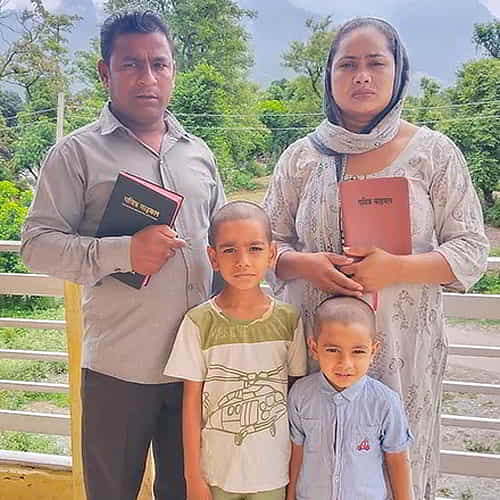
One of these national missionaries is Pastor Talon. Fifteen years ago, when he first stepped into a remote village, he had little idea of the impact that the love of God flowing through him would have.
A couple living there had been married for fourteen years but had been unable all that time to have children. Pastor Talon prayed fervently for them over the next six months, and God blessed them with a child! They became the village’s first believers.
Pastor Talon continued to show God’s love for the people by holding prayer meetings, where people were healed and lives were changed. One man, Radu, had been a danger to the community―mentally ill and roaming the streets, attacking others with sticks and stones. When Pastor Talon prayed for him, he was healed, and more people saw and trusted in the power of God.
These healings bore witness to God’s compassion in ways words alone could not. The village watched skepticism dissolve as Radu’s transformation unfolded—a man once feared became a testimony of restoration.
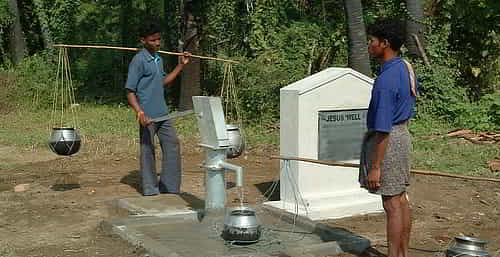
As time went on, some people opposed Pastor Talon, preventing him from getting water from the local hand pump. Rather than getting upset, the pastor saw the need for a clean water source in the community, and his leaders arranged for three Jesus Wells to be built in the area.
The water was free to all, no exceptions or exclusions. Pastor Talon willingly meeting this basic need for the whole village—even for those who opposed him—displayed how sacrificially and freely God loves people.
This response to hostility embodied Christ 2 Corinthians 5:15’s principle—that those who live should no longer live for themselves. By serving his opponents, Pastor Talon demonstrated the reconciling love at the core of ambassadorship.[7]
In 2013, when continuous rain flooded the area, sweeping away homes, belongings and loved ones, nearby GFA pastors stepped in to help. They brought essentials like groceries, medicines, mosquito nets, blankets and clothing.
The people were immensely grateful, and the love of God flowing through His people continued to touch and change their hearts.[8]
Disaster relief revealed ambassadorship at its most urgent—meeting immediate crisis while pointing to the God who sustains even in chaos. The timing of this aid, when government resources proved insufficient, made God’s provision unmistakable.
You Can Be an Ambassador
Pastor Talon is just one of GFA’s national missionaries; there are many others around the world, working to meet physical needs and demonstrate the love of God. However, you do not need to be a missionary to be an effective ambassador for Jesus Christ.
In Second Corinthians, Paul urges reconciliation with God. Being Christ’s ambassador means sharing the Good News with those who need to hear it. There are people everywhere who do not know about God’s love for them, those who have physical and spiritual needs that are not being met.
Ambassadorship isn’t reserved for professional ministers—it’s the calling of every believer. As Paul wrote, “We implore you on behalf of Christ, be reconciled to God,” every Christian carries this same holy appeal.[9]
Practical Ways to Represent Christ
As ambassadors, we can step in and help. It could be a prayer, a meal, a hug or a conversation, but each believer can represent Christ to those around them.
Practical ambassadorship might mean mentoring a struggling student, visiting an isolated neighbor, or advocating for justice in your workplace. Small, consistent acts of love accumulate into powerful testimonies of God’s character.
The key is intentionality—recognizing that every interaction offers opportunity to reflect the compassion, integrity, and hope that define holy God. When believers live this way, they become walking demonstrations of what reconciliation looks like.[10]
Also, consider representing Christ to the whole world by partnering with GFA and supporting one of our national missionaries or sponsoring a child.
Partnership amplifies impact—your support enables ambassadors to serve full-time in communities where the need is greatest and access most restricted. What might seem like modest monthly giving becomes life-transforming investment when channeled to regions with minimal infrastructure and maximum poverty.
Learn more about Christian medical missions Africa[1] “Ambassador.” Cambridge Dictionary. Accessed October 13, 2024. https://dictionary.cambridge.org/dictionary/english/ambassador.
[2] “2 Corinthians 5:18-19.” Bible Gateway. Accessed March 7, 2026. https://www.biblegateway.com/passage/?search=2%20Corinthians%205%3A18-19&version=NKJV.
[3] For God so loved the world that He gave His only begotten Son, that whoever believes in Him should not perish but have everlasting life (John 3:16, NKJV).
[4] “About National Missionaries.” GFA World. Accessed October 13, 2024. https://www.gfa.org/sponsor/why-national-missionaries/?motiv=WC60-GA11&cm_mmc=GFA-_-SEO-_-gospelforasia.org-_-Var&utm_medium=seo&utm_source=gospelforasia.org&utm_campaign=var.
[5] “About Us.” GFA World. Accessed October 13, 2024. https://www.gfa.org/about/?motiv=WC60-GA11&cm_mmc=GFA-_-SEO-_-gospelforasia.org-_-Var&utm_medium=seo&utm_source=gospelforasia.org&utm_campaign=var.
[6] “What Does the Bible Say About Caring for the Poor?” Bible Study Tools. Accessed March 7, 2026. https://www.biblestudytools.com/topical-verses/bible-verses-about-caring-for-the-poor/.
[7] And He died for all, that those who live should live no longer for themselves, but for Him who died for them and rose again (2 Corinthians 5:15, NKJV).
[8] “Flow of Love Turns Tide in Remote Village.” GFA World. February 2024. https://www.gfa.org/news/articles/flow-of-love-turns-tide-in-remote-village-wfr24-01/?motiv=WC60-GA11&cm_mmc=GFA-_-SEO-_-gospelforasia.org-_-Var&utm_medium=seo&utm_source=gospelforasia.org&utm_campaign=var.
[9] Now then, we are ambassadors for Christ, as though God were pleading through us: we implore you on Christ’s behalf, be reconciled to God (2 Corinthians 5:20, NKJV).
[10] “7 Essential Ways to Be an Ambassador for Christ.” Crosswalk. Accessed March 7, 2026. https://www.crosswalk.com/faith/spiritual-life/7-essential-ways-to-be-an-ambassador-for-christ.html.