
Christian Medical Missions Africa

What Impact Do Medical Christian Missions Have on Global Health?

GFA World’s commitment to medical Christian missions includes Christian medical mission work that prioritizes preventive healthcare through handwashing education, a simple yet vital practice that saves countless lives. In many impoverished communities, basic hygiene knowledge can make the difference between life and death, especially when medical facilities are limited or inaccessible. Across much of Africa, countries have fewer than one doctor for every 10,000 people — so staying well matters more than getting treated.[4] Without this basic health education, many families face the risk of contracting preventable diseases, further deepening the cycle of poverty.

One of GFA World’s impactful initiatives involves organizing educational programs that teach effective handwashing techniques. These efforts are crucial, as statistics from the Centers for Disease Control and Prevention (CDC) reveal that proper handwashing can reduce the risk of respiratory illnesses by up to 21% and lower the incidence of diarrhea by 23-40%.[1] For communities with limited access to healthcare, such preventive measures are not just beneficial—they are lifesaving. National missionaries — local men and women who live in the villages they serve — teach these skills as neighbors, not strangers. When a missionary trained as a healthcare worker shows a mother how to wash her child’s hands, the habit sticks because the teacher is someone the village already trusts.

CDC numbers show that towns where people wash hands see far less sickness in every age group — a truth that makes trained healthcare workers in these places all the more vital. For children, the shift is plain: fewer fevers, fewer days lost from school, fewer long walks to a far-off clinic. A habit that costs close to nothing pays back gains that last a whole lifetime.

One Habit, Endless Ripples

A powerful example of this impact comes from a home for street children where Sisters of the Cross (formerly Sisters of Compassion) and GFA World workers taught the importance of handwashing to reduce the spread of disease. The street children faced high mortality rates due to poor hygiene and the difficult conditions of their lives. During the visit, workers distributed soap and provided essential hygiene lessons. One 18-year-old, Hitanshu, shared, “I was living like a savage animal and did not care about my body. No one taught me anything about a healthy lifestyle, but today I have learned a lot.”[2] His response reflects the transformative power of simple health education, which provides a chance at better health and a brighter future for children who have long been neglected. A young man whom every system had failed was seen, taught, and shown he had worth. The soap and the lesson were plain things, but they told him what no one ever had: your body matters, and so do you.

Beyond individual testimonies, GFA World’s handwashing programs have a far-reaching impact. In areas with high rates of illness, regular educational efforts help families adopt effective hygiene practices that significantly reduce the spread of infections. According to CDC data, proper handwashing can reduce absenteeism in schoolchildren by up to 57%,[3] a crucial improvement for those for whom gaining an education is so vital. By equipping communities with knowledge and practical skills, GFA World is helping break the cycle of sickness that traps many in poverty. When children stay in school instead of lying sick at home, the good reaches far past the classroom. A girl who finishes school earns more, weds later, and raises children who are healthier — all because a plain habit kept her well enough to learn.
The ripple effect of these efforts is profound. When families implement proper handwashing, the spread of diseases like pneumonia and diarrhea is significantly reduced, protecting the most vulnerable, especially young children, the elderly, and those with weakened immune systems. One clean family shields the one next door. A whole village that washes together builds a wall no single home could raise on its own.
Medical Camps Bring Care to the Doorstep

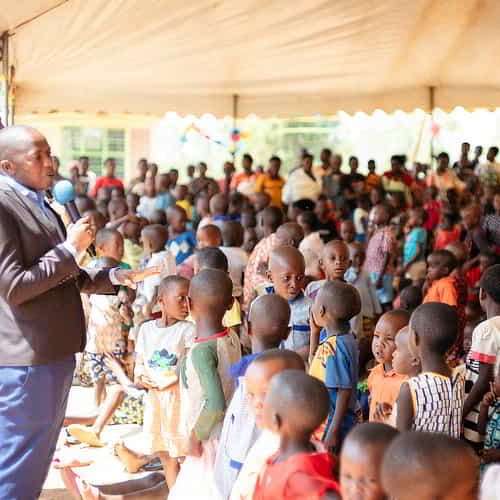
Handwashing stops sickness before it starts, but millions of people in Africa are already sick with nowhere to turn. In far-off villages, the nearest clinic may be hours away on foot, and the cost of care is more than a family earns in a month. GFA World fills this gap with medical camps. These mobile clinics bring free exams, treatment, and drugs straight to underserved communities where no hospital stands for miles.

National missionaries run these camps as part of GFA World’s medical missions Christian outreach, sending trained medical missionaries to villages that have never seen a doctor. The camps give out vaccines, vitamins, malaria care, and wound treatment — patient care given with kindness, free of charge. An old couple in a mountain village got help for dizziness and weakness that had dragged on for months. “I feel very happy that a service like this was made available to us,” one of them said.[5]

These medical mission trips — which include short term trips by visiting doctors — are not one-day events. National missionaries live nearby, so they come back again and again, checking on the sick and earning trust that takes years to build. A mother who brings her crying child to a camp sees a face she knows from church and hears a voice that speaks her own tongue. That bond is what turns a one-time visit into a life changed for good.

Building Healthcare That Lasts for Generations

Past the camps, GFA World is raising something built to last. A 450-bed hospital and medical school in Kigali, Rwanda, will be among the largest and best-outfitted centers on the continent — a hub for world medical mission work across East Africa. Its doors will offer Christian healthcare to the poorest at no cost, while its rooms train doctors nurses from the very places they will one day serve.GFA World announced

WHO warns that Africa cannot close its healthcare professionals gap by leaning on outside help. The lasting fix is to train medical professionals who already belong to the towns they will serve. Short term visits by specialists now pair with the staying power of local staff. A doctor in Kigali can guide a village health worker through a screen, saving a sick person a trip that once took a whole day.WHO reports A medical ministry — a medical mission ministry built this way — grows from the inside and does not depend on outsiders to keep going.

In Rwanda, WHO numbers show just 0.9 doctors for every 10,000 people — a count so low that most families cannot reach even basic care.[6] The Kigali hospital and its school are built to flip that number over a generation. Each doctor and nurse who learns there goes back to a rural district to treat thousands of patients over a full career. The hospital is more than bricks — it is a promise that the next child born in a village without a clinic will not have to grow up without a doctor.

Clean Water Changes Everything

Drugs heal the sick, but clean water keeps people from getting sick to start with. Across Africa, sickness from dirty water — cholera, diarrhea, typhoid — is among the top killers of children under five. WHO counts nearly half a million deaths from diarrhea each year — and the heaviest burden falls on sub-Saharan Africa.WHO reports

GFA World takes on this need through Jesus Wells — deep wells that bring safe water to villages where families once walked hours to reach a dirty source. National missionaries drill the wells and teach local leaders how to tend them. One well can serve a whole village for years, cutting the sickness that keeps children home and parents too ill to work — a quiet engine of community health that runs on clean water.

Clean water turns a village around faster than almost anything. Children fall sick far less often, and parents spend less on drugs they once bought each month. This well grows into the heart of town life. Local churches gather beside it as neighbors meet, and the Gospel of Jesus Christ is shown through the simple act of sharing what all need to live. As Jesus said, “Whoever gives one of these little ones only a cup of cold water in the name of a disciple, assuredly, I say to you, he shall by no means lose his reward” (Matthew 10:42, NKJV). The water flows on long after the drill rig pulls away — a quiet sign that someone cared to dig that deep.

Joining the Work of Healing

Through these educational programs, GFA World is not only addressing immediate health needs but also planting seeds of hope for a healthier, more resilient future. By teaching the value of a simple act like washing hands, GFA World is making a lasting impact on countless lives, showing God’s love in a practical and powerful way.

Each medical camp, each handwashing class, each Jesus Well, and each bed in the Kigali hospital is there because someone chose to give to a neighbor they may never meet. National missionaries do this work day after day, year after year. They are held up by people who believe that when they share the Gospel through action, mending a child’s body can open a door to hope for the child’s soul.

You can step into this work and change a life. When you sponsor a national missionary, you back someone who already knows the language, already knows the ways of the place, and is already there — serving their own town for life. A gift to the medical fund puts drugs in the hands of a trained missionary who will use them to save a life this week. These are not checks sent far away — they are healing done each day by someone who calls the place they serve their home.

Learn more about Christian medical missions Africa

[1] “Clean Hands Save Lives — Handwashing Facts.” CDC. https://www.cdc.gov/clean-hands/data-research/facts-stats/. April 17, 2024.
[2] “GFA Teaches Inmates, Children Proper Hygiene Tips.” GFA World Ministry Reports. https://gospelforasia-reports.org/2020/11/gfa-workers-teach-inmates-children-proper-hygiene-tips/. November 5, 2020.
[3] “Clean Hands Save Lives — Handwashing Facts.” CDC. https://www.cdc.gov/clean-hands/data-research/facts-stats/. April 17, 2024.
[4] “Health Workforce.” WHO Regional Office for Africa. https://www.afro.who.int/health-topics/health-workforce. Accessed May 3, 2026.
[5] “Mountain Trails No Deterrent for GFA Medical Camp.” GFA World. https://www.gfa.org/news/articles/mountain-trails-no-deterrent-for-gfa-medical-camp-wfr22-06/. June 6, 2022.
[6] “Density of physicians (per 10,000 population): Rwanda.” World Health Organization. https://data.who.int/indicators/i/CCCEBB2/217795A?m49=646. Accessed May 3, 2026.