
Christian Medical Missions Africa

How Are Christian Medical Missions in Africa Addressing the Region’s Healthcare Challenges?

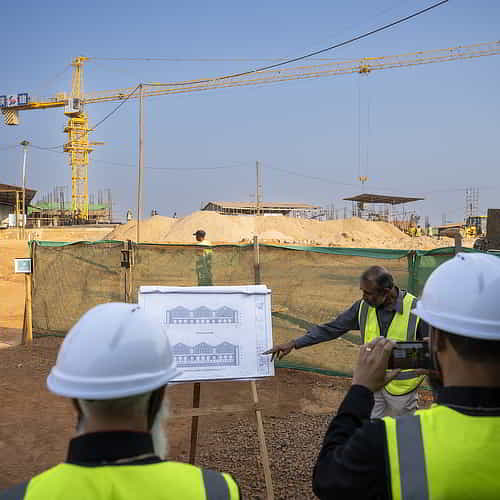
Countless lives are being transformed through Christian medical missions in Africa, and GFA World is part of the solution. These missions are not only providing needed healthcare but also showing God’s love in action. In response to the huge need for accessible medical services, GFA World has launched a major effort: a state-of-the-art medical facility and training center in Kigali, Rwanda. Set to open by the end of 2025, this 450-bed hospital will be one of the largest and best-equipped on the continent, serving as a hub for launching medical missions across sub-Saharan and North Africa. Africa carries a quarter of the world’s disease load yet holds just three percent of its health workers — fewer than one doctor for every 10,000 people in many nations. [1]

A mother with a feverish child may walk half a day and find no one who can help. The region holds nearly half of all deaths among children under age five worldwide. Infections, deaths in childbirth, and long-term ills left untreated pile into a crisis no single hospital can solve alone. A network of trained workers bringing care to the village level shifts the odds one community at a time.

The Kigali hospital anchors a vision of mission hospitals that do more than treat disease. They train doctors and nurses who stay in the region. They offer a full range of medical services — from surgery to dentistry — so families no longer travel days for basic medical and dental care. This kind of thorough medical care changes the math for whole communities. When a mother knows her child can see a doctor without crossing a border, hope becomes as real as a clean bandage and an antibiotic.

Mobile Clinics and Telemedicine Reach the Unreachable

This multi-specialty hospital is set to provide critical care to the poorest of the poor, addressing the immense healthcare challenges faced by millions. Diseases like malaria, which claims over 400,000 lives annually, will be a primary focus. The medical teams at the Kigali facility will work tirelessly to prevent and treat such illnesses, bringing lifesaving care to those who have long suffered without access to medical help. The expansion of telemedicine will also be a game-changer, enabling people in isolated areas to receive professional consultations and diagnoses remotely. Telemedicine bridges the distance between rural patients and specialists, and GFA World’s medical camps go further — sending trained medical staff into villages where roads end and the nearest clinic is a full day’s walk. “Telemedicine is a revolutionary tool that will save thousands of lives,” said GFA World founder K.P. Yohannan (Metropolitan Yohan).[2]

A community health worker with a tablet can send images to a doctor in Kigali, get a real-time reading, and start treatment on the spot — no ambulance, no days-long trip. The same hands that set a broken bone in the morning teach a handwashing class in the afternoon. That is what it means to build a health system that reaches everyone, not just those who can reach it.

This initiative extends beyond immediate care; the aim is to also build a lasting healthcare system for the future. The new medical school and training center on the campus will play a vital role in equipping African doctors and nurses. By training local healthcare professionals, GFA World is investing in long-term solutions that will keep helping communities for years to come. These workers will become leaders in their regions, laying the groundwork for ongoing health gains and community change. When healthcare workers train in their own country and stay to serve their own people, the whole health system grows stronger — from the village clinic upward, year by year. The World Health Organization confirms that regions with the highest disease burdens have the fewest health workers to meet them.

Trust, Compassion, and Preventive Care

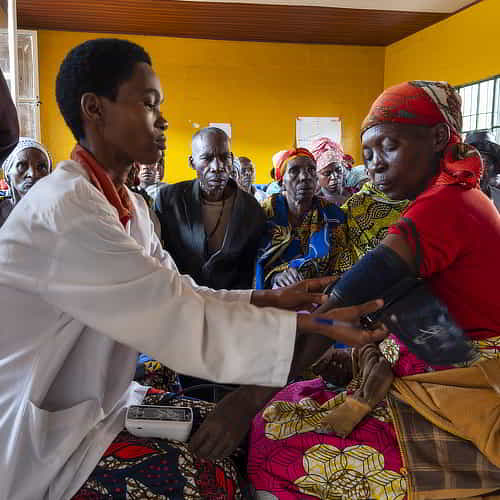
What makes these outreaches work is the trust behind them. Local healthcare workers — national missionaries who speak the language, share the culture, and live in the places they serve — staff the camps and clinics. A mother bringing her sick child sees someone she knows, a neighbor she has watched live faithfully among them for years. That kind of trust does not grow on short term visits. When people who stay for the long haul lead medical mission trips, the care they give goes deeper than a pill — it restores dignity along with health.

The social impact of this project is profound. The facility will offer compassionate, Christ-centered care to the neediest populations, demonstrating the tangible love of Jesus. “The reason we’re here is because of the love of Christ,” K.P. emphasized. “There’s no more powerful example than going to the poorest and neediest right where they are and being as Jesus to them.” This is not care sent from a distance. It is presence — the kind Jesus Himself lived out when He went to the sick and the hurting in Galilee. That same presence drives the health work national missionaries carry into villages, teaching handwashing and making sure a simple infection never turns deadly. [3]

The Centers for Disease Control and Prevention reports that proper handwashing cuts lung infections by up to 21 percent and diarrheal disease by as much as 40 percent. National missionaries teach handwashing by doing it with the families they serve. They show the steps to children and come back to make sure the practice sticks. Over time, a small habit keeps a whole village from needless sickness.

Clean Water and the Workforce of Tomorrow

Clean water and health cannot be pulled apart, and GFA World tackles both together. Jesus Wells — deep-capped borewells put in where safe drinking water does not exist — cut off the waterborne sickness that fills hospital beds. When a village gets clean water and learns to keep it flowing, the load on local clinics drops. A well is not an extra to medical work. It is medicine given at the village level, lasting for years.

The medical professionals who finish school at Kigali will go home to villages that have never had a doctor and stay for the rest of their careers, training the next set of nurses in turn. The World Health Organization reports that sub-Saharan Africa carries a disproportionate share of the global disease burden yet has the lowest density of health workers anywhere in the world — around 2 doctors and 10 nurses and midwives for every 10,000 people — a gap no amount of short term aid can close. Building local skill is the only path that lasts, and it starts with schooling that stays in the region.[4]

The apostle Paul wrote to the church in Corinth, “Therefore, my beloved brethren, be steadfast, immovable, always abounding in the work of the Lord, knowing that your labor is not in vain in the Lord” (1 Corinthians 15:58, NKJV). National missionaries live out this steadiness every day. They do not move on when things get hard, and their work is not measured in numbers alone. A trained nurse who stays in her village for thirty years will treat children and grandchildren. Some of those children will grow up to become nurses as well. That is far more than a program outcome — it is a legacy no short-term project can match.

A Future of Health and Hope for Africa

The vision is not just to treat sickness but to build communities where health can bloom. When medical professionals trained in Kigali return to their home villages, they carry both skill and a pledge to stay. They do not complete mission trips of a few weeks and leave — they belong to the places they serve. They are term medical missionaries in the truest sense, rooted in one community and raising their own children among the people they heal. This model — local people trained to lead, given the tools they need, and moved by the love of Christ — creates a cycle of care that outlasts any single program. GFA World trains national missionaries for a lifetime of service in the places they call home.

Through this bold new venture, GFA World is bringing hope and healing to Africa’s most underserved areas. By addressing urgent medical needs and training future healthcare leaders, they are creating a ripple effect of positive change that will be felt for generations. GFA World’s commitment to serving with compassion reflects their vision of making a lasting difference and sharing God’s love through practical, lifesaving actions.

Every patient treated at a medical camp, every nurse trained at Kigali, and every village that gains clean water is one piece of a larger story. The work is slow, built person by person and community by community. But slow work is not uncertain work — it builds and grows. When the love of Christ is the motive, even the smallest act of care — a washed wound, a taught handwashing lesson, a well that draws clean water for the first time — becomes part of something that lasts.

The Kigali hospital opens its doors at the end of 2025, but the mission is already underway. National missionaries are running mobile clinics today, health workers are learning how to stop disease before it starts, and villages are drinking clean water for the first time. GFA World sponsors national missionaries who serve their own communities for life. These men and women bring basic care, health teaching, and the hope of Christ to places others never reach. They do not visit and then leave — they stay. And when they stay, whole communities start to heal.

Learn more about Christian medical missions Africa
[1] “GFA World Launches Multi-Specialty Hospital In East Africa.” Patheos. May 7, 2024. https://www.patheos.com/blogs/gospelforasia/2024/05/never-seen-suffering-on-this-scale-global-organization-launches-multi-specialty-hospital-in-east-africa/.
[2] Ibid.
[3] Matthew 4:23–24 (NKJV).
[4] “Health Workforce.” World Health Organization. https://www.who.int/data/gho/data/themes/health-workforce.